

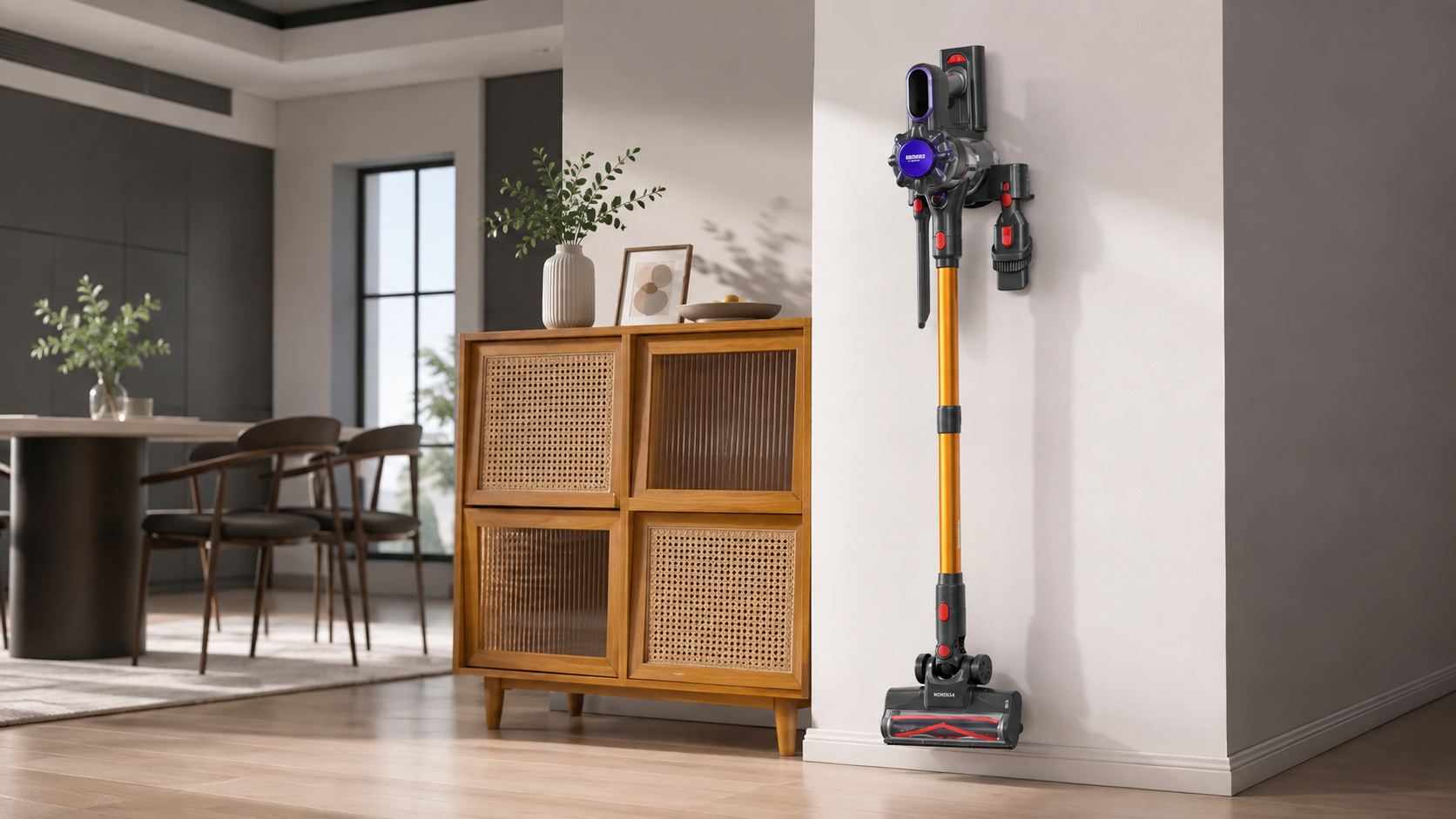
The 4 Core Components of a Cordless Vacuum
Despite their sleek and compact appearance, modern cordless vacuums rely on four highly specialized engineering systems working in perfect synchronization.
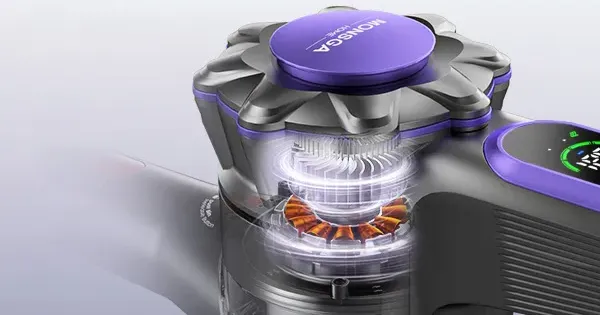
1. High-Speed BLDC Motor
The beating heart of any cordless vacuum is its Brushless DC (BLDC) motor. Rotating at astonishing speeds—often exceeding 100,000 RPM—the motor drives fan blades to rapidly evacuate air from inside the device.
As internal air is pushed out at high velocity, it creates a powerful low-pressure zone (negative pressure) inside the chamber.
2. Optimized Airway Structure
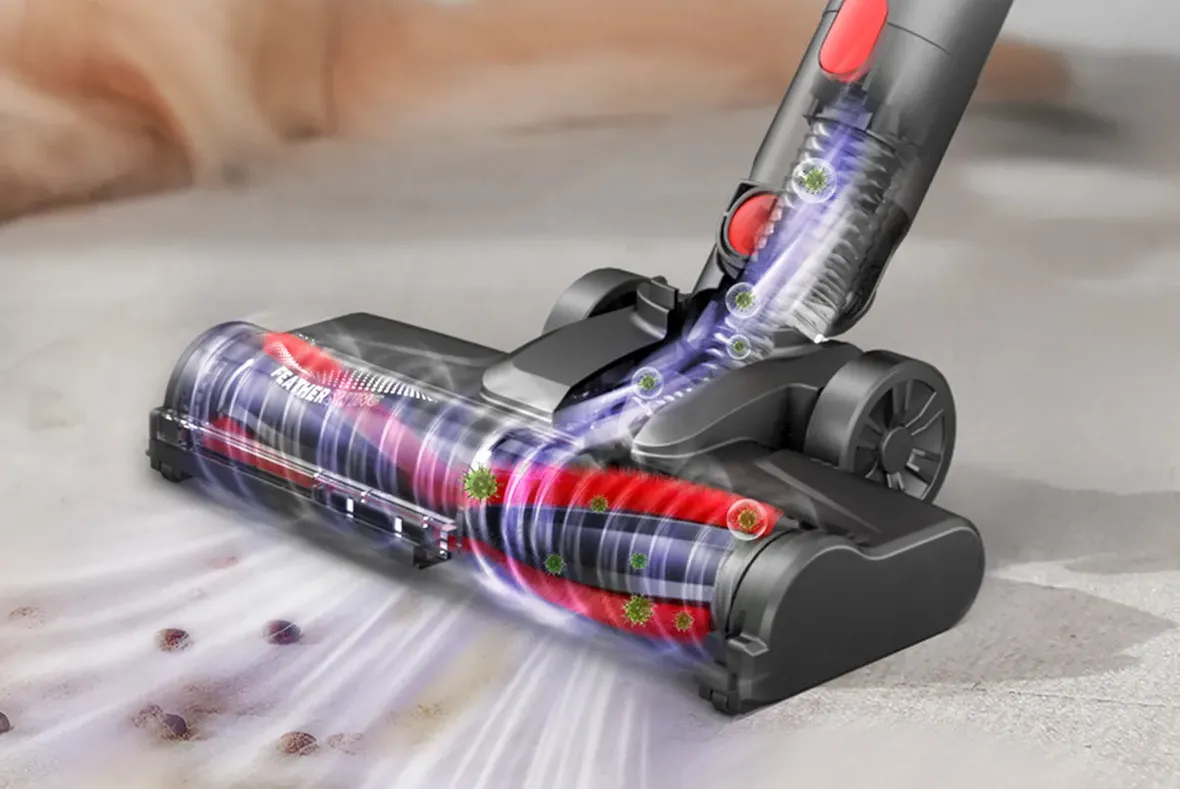
The airflow pathway spans from the nozzle and extension wand to the dustbin, motor, and exhaust vent.
When the nozzle presses against a surface, the pressure difference forces ambient air—along with dust, hair, and debris—rushing into the low-pressure airway to restore balance.
Filtration and Power Systems
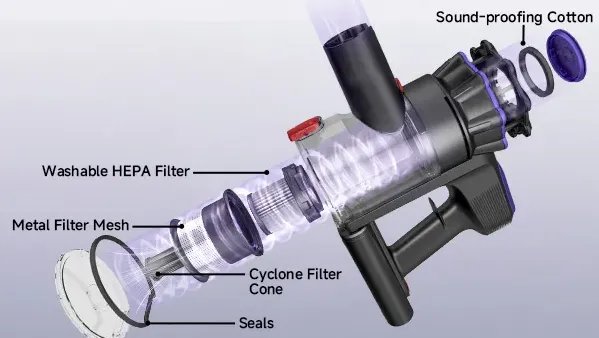
3. Advanced Cyclonic Filtration & HEPA Systems
To keep air flowing and protect internal components, incoming debris must be separated from the air stream immediately:
-
Cyclonic Separation: Powerful air vortices spin incoming air at extreme speeds, using centrifugal force to fling heavy particles against the dustbin walls.
-
HEPA Filtration: Microscopic particles and allergens are trapped by high-efficiency filters before the air reaches the motor.
This multi-layer system prevents dust from reaching the motor, extending machine lifespan while exhausting clean, purified air into your room.
4. High-Density Lithium-Ion Battery Pack
Cordless convenience depends entirely on energy storage. High-capacity lithium-ion battery packs (typically operating between 20V and 25V) deliver continuous high-current discharge.
While battery capacity determines overall runtime, motor efficiency dictates how effectively that electrical energy converts into usable suction force.
Step-by-Step: The Complete Cleaning Cycle
Understanding the full operation is simple when broken down into a single continuous loop:
-
Energy Delivery: The lithium-ion battery powers the BLDC motor.
-
Pressure Drop: The ultra-fast motor evacuates air, creating an internal vacuum state.
-
Debris Intake: Negative pressure forces outside air and floor dust into the nozzle.
-
Separation: Cyclonic force drops heavy debris into the bin, while HEPA filters capture microscopic dust.
-
Clean Exhaust: Purified air passes through the motor housing and exhausts safely back into your home.
Why Do Cordless Vacuums Lose Suction Over Time?
It is common for vacuums to feel less powerful after months of use. Fortunately, suction loss is rarely a permanent hardware failure—it is usually caused by simple air restriction.
Overfilled Dustbins and Blocked Airways
When the dustbin reaches capacity, incoming air has less volume to circulate, restricting overall velocity and reducing suction strength at the nozzle.
Clogged HEPA Filters
Microscopic particles eventually coat the fine mesh of HEPA filters. Restricted exhaust airflow prevents the motor from creating a strong pressure drop. Regular washing or filter replacement restores full performance.
Voltage Drops During Discharge
As battery charge diminishes during a cleaning cycle, operating voltage naturally drops. Advanced motor drivers mitigate this, but maintaining a fully charged battery ensures peak RPM performance.
🔔 Coming Next Week: Demystifying Suction Power Specs!
Now that you understand the science of how cordless vacuums generate suction, what about the numbers on the spec sheet? Pascals (Pa), Air Watts (AW), and CFM—what do they actually mean for your carpets and hardwood floors?
Bookmark our blog and check back next week as we break down vacuum suction specs so you can pick the perfect cleaning power for your home!
Experience the perfect balance of advanced physics, effortless mobility, and deep cleaning performance.
Explore MONSGA Cordless Vacuums Today and elevate your home cleaning routine!